

Did you know that November is National Diabetes Month
I think when you hear stories or read about diabetes, most of that content starts with the scary part.
I’d rather start with the hopeful part, because it’s the part I wish more of my patients knew.
Most importantly, type 2 diabetes usually doesn’t show up overnight. It develops slowly, often over years, and that means there is a long stretch before it arrives when your blood sugar is creeping up but hasn’t crossed the line. That stretch is called prediabetes, and it is a real opportunity to change the direction of your health.
Here’s the number that surprises people. More than 1 in 3 adults in the U.S. has prediabetes. Most of them have no idea. There’s usually no symptom that tips you off, so the only way to know is to check.
When should you get checked?
Short answer:
If you’re 35 or older, yes. Checking is recommended for everyone starting at that age.
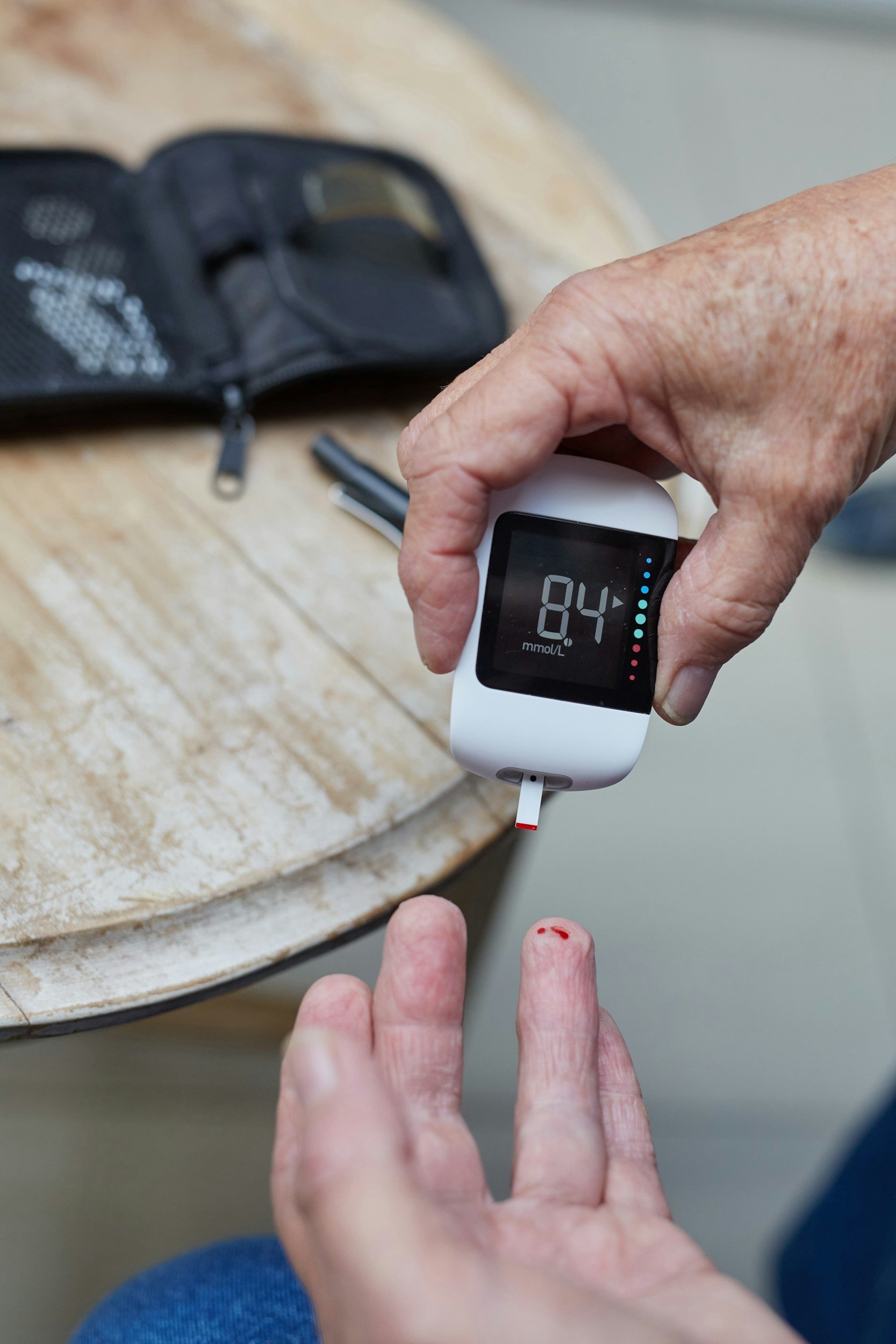
A quick and simple sugar test can let you know where you stand when it comes to prediabetes.
You may want to ask about a blood sugar test sooner, at any age, if any of these sound like you:
You’re overweight and have at least one other risk factor
A parent, brother, or sister has diabetes
You had diabetes during pregnancy, or had a baby over 9 pounds
You have high blood pressure, low HDL (“good”) cholesterol, or high triglycerides
You’re not very physically active
You’re African American, Hispanic/Latino, Native American, Asian American, or Pacific Islander
I do feel that last risk factor deserves a quick explanation. Risk can be higher in these groups, and for Asian Americans it starts at a lower body weight than many people expect. If that’s you, don’t assume a number on the scale means you’re in the clear.
It’s always better to be educated and informed about your health than to make assumptions.
If you want a starting point before you ever talk to a provider, the American Diabetes Association has a one-minute Diabetes Risk Test at diabetes.org/diabetes-risk-test. A score of 5 or higher means it’s worth a conversation.
What do the numbers actually mean?
There are three simple blood tests. This is what the results tell you:
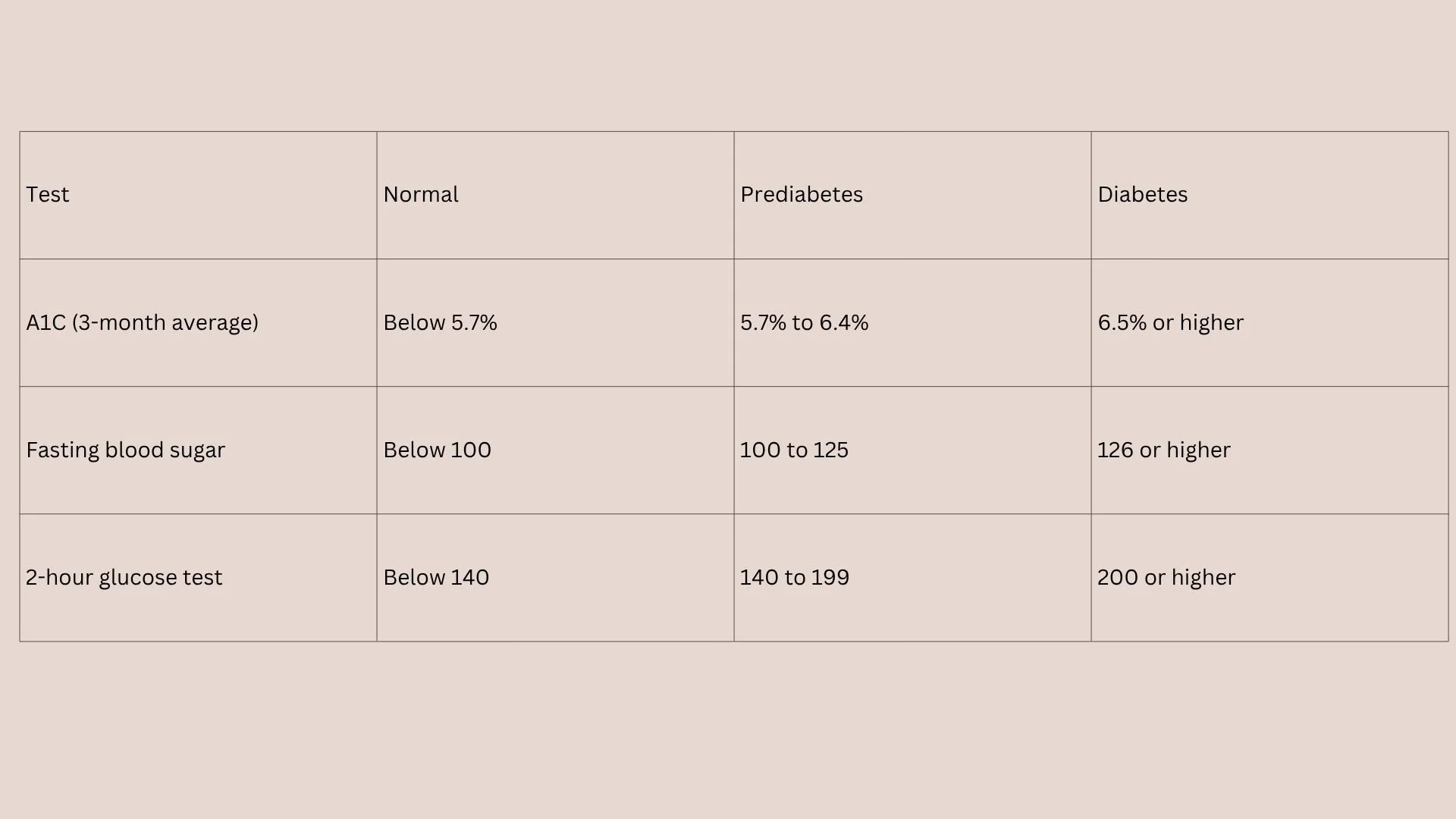
Blood sugar values are in mg/dL.
My thoughts: The A1C is the one I reach for most. Think of it as a three-month average of how your blood sugar has been behaving, not just a snapshot of the morning you happened to be tested. It also doesn’t require fasting, so it’s easy to fit into a normal day.
If your results land in the prediabetes range, I’d want to recheck every year so we catch any change early. A number in that range is not a diagnosis of anything permanent. It’s information, and you get to decide what to do with it.



Now let's talk about what actually works

This is the part I get genuinely excited about.
A large national study called the Diabetes Prevention Program found that lifestyle changes cut the chance of developing type 2 diabetes by about 58%. That beat medication. Here is what those changes looked like in real life.
A little weight loss goes a long way. Losing about 7% of your body weight makes the biggest difference. If you weigh 200 pounds, that’s around 14 pounds. Slow and steady is the goal, about 1 to 2 pounds a week, and the point is to keep it off rather than to hit a number fast.
Move about 150 minutes a week. That’s a brisk 30-minute walk, five days a week. Activity helps your body handle blood sugar even if the scale doesn’t budge much, so please don’t skip it because the weight isn’t moving.
Eat in a way you can live with. More vegetables, fruit, whole grains, and lean protein. Less added sugar, fried food, and sugary drinks. I’m not asking anyone to give up every food they love. I’m asking for a pattern you can actually keep.
Ask about a prevention program or metformin. There are free, proven lifestyle programs out there, and the CDC has a directory so you can find one near you. Some people also do well with a medication called metformin, and that’s a good conversation to have with your provider.
Where to start this month
If you’re 35 or older and can’t remember your last A1C, put it on your list. If you’ve been told your numbers were “a little high” and nobody followed up, ask again. And if you’re not sure where you land, take the one-minute risk test and bring the result with you.
This is exactly the kind of thing I love having time for at Alpine Wellness. When we go through your numbers together, we’re looking at where you’ve been, where you’re heading, and what’s realistic for your life. Nobody gets handed a printout and sent home to Google it.
A few places worth bookmarking if you want to read more on your own:
CDC National Diabetes Prevention Program: cdc.gov/diabetes-prevention
CDC Prediabetes: cdc.gov/diabetes/prevention-type-2
American Diabetes Association: diabetes.org
NIDDK Game Plan to Prevent Type 2 Diabetes: niddk.nih.gov
Reminder: This post is for general education and doesn’t replace advice from your own healthcare provider. Please talk with them before starting a new exercise program or making big changes, especially if you have a chronic condition.
Overview: Amber Loredo, FNP-C of Alpine Wellness in Bend, Oregon explains prediabetes in plain English: who should get checked, what A1C numbers mean, and what actually lowers your risk of type 2 diabetes.
Don’t stop here, check out some of the other posts on
The Journal



Welcome, I am so glad you are here!
I’m Amber Loredo, a FNP-C - Family Nurse Practitioner and the founder of Alpine Wellness, a Direct Primary Care clinic in Bend, Oregon. With over 15 years in medicine, I have built Alpine Wellness around one idea, that patients deserve a provider who actually knows them. I specializes in preventive care, hormone health, and metabolic wellness, and I am known by my patients for translating complex medical information into plain English. My clinic, Alpine Wellness serves patients throughout Central Oregon including Bend, Redmond, and Sisters. If you're curious about Direct Primary Care, you can book a free discovery call at alpine-wellness.net.

Did you know that November is National Diabetes Month. I think when you hear stories or read about diabetes, most of that content starts with the scary part. I’d rather start with the hopeful part, because it’s the part I wish more of my patients knew. Most importantly, type 2 diabetes usually doesn’t show up overnight. It develops slowly, often over years, and that means there is a long stretch before it arrives when your blood sugar is creeping up but hasn’t crossed the line. That stretch is called prediabetes, and it is a real opportunity to change the direction of your health.